

The Twink Frey Visiting Social Activist (TFVSA) Program brings to CEW+ a social justice activist whose work affects women and recognizes gender equity issues. One goal of the program is to build the capacity and effectiveness of social activists. This is accomplished by giving the TFVSA time, space, and support to work on a project that would not be possible under the activist’s usual working circumstances.
Cherisse Bradley: 2026-27
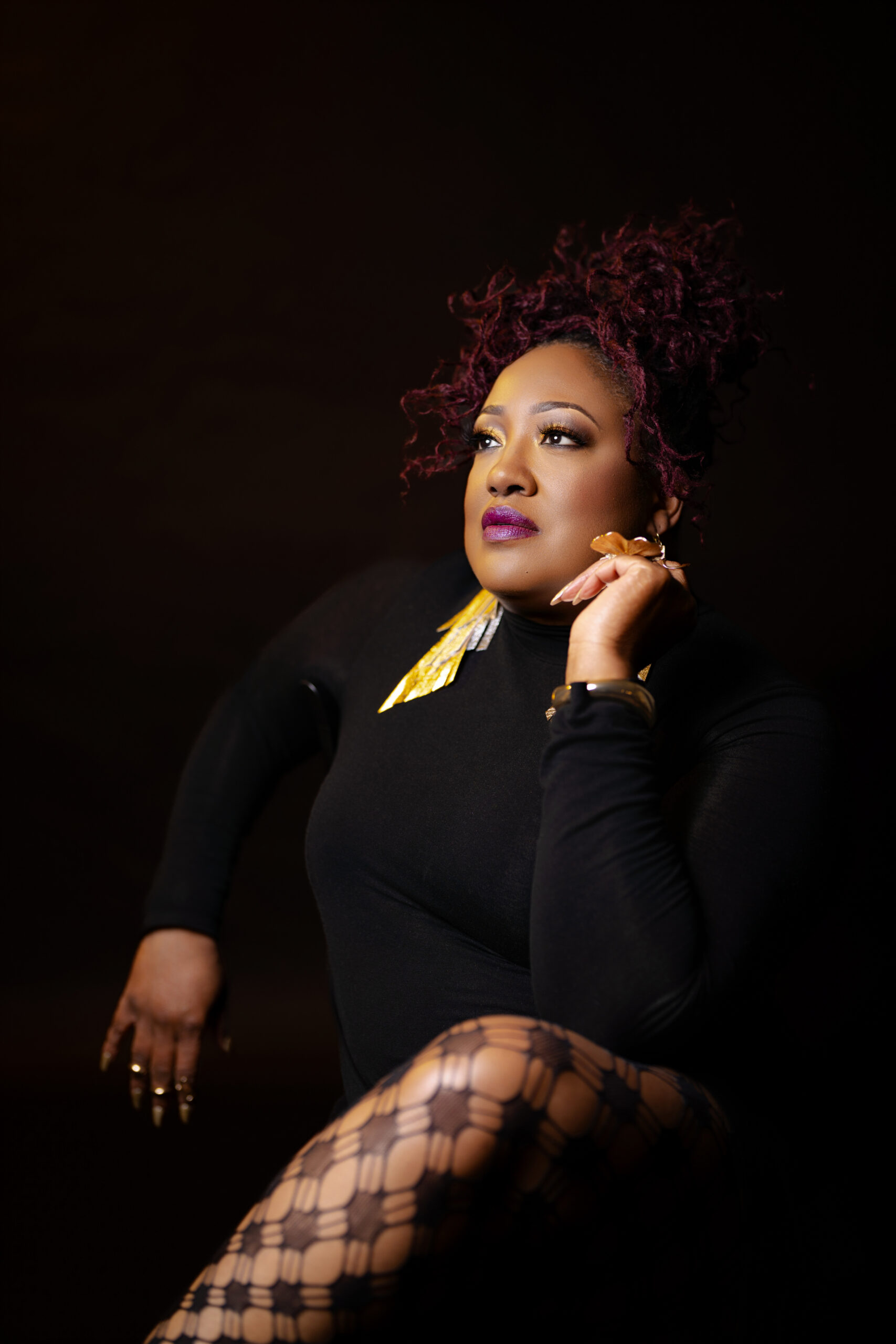 Cherisse Bradley is a Flint, Michigan-based multidisciplinary performing artist, producer, educator, and advocate whose creative and community work centers the voices, healing, resilience, and empowerment of women. Through music, theatre, dance, storytelling, mentorship, and community engagement, she uses the arts as a vehicle for helping women discover, reclaim, and use their voices.
In 2013, Cherisse founded I Found My Voice (IFMV), a creative arts wellness initiative supporting survivors of domestic violence and sexual abuse through creativity, connection, and self-expression. With grant support from the Greater Flint Arts Council, IFMV has partnered with organizations including the YWCA, University of Michigan-Flint Women’s Educational Center, Odyssey House, and New Path. She also created and produced the I Found My Voice – Tribute to Women concert series, celebrating women’s artistry, resilience, and stories.
Cherisse’s artistic journey began at age ten through music and musical theatre. She trained in tap, jazz, hip-hop, and ballet at Creative Expressions Dance Studio in Flint and earned awards for showmanship, teaching, and choreography at Joe Tremaine National Dance Competitions. After relocating to New York City, she pursued vocal jazz studies at Long Island University-Brooklyn Campus with Dr. Gloria Cooper and saxophonist Sam Newsome, performing at venues including Billie’s Black in Harlem and the Metropolitan Room in Manhattan.
Cherisse serves as Director and Head Choreographer of Mott, Motown & More and as Program Coordinator for Women in Education at Mott Community College, where her “Voice Is Life” theme integrates creativity, wellness, mentorship, and professional development.
As the 2026-27 CEW+ Twink Frey Visiting Social Activist, Cherisse is developing a multidisciplinary solo performance and companion interactive workshop and teaching guide exploring voice, identity, resilience, healing, and creative expression, with the goal of creating an arts-based experience that can extend into educational and community settings.
Cortney Sanders: 2025-26
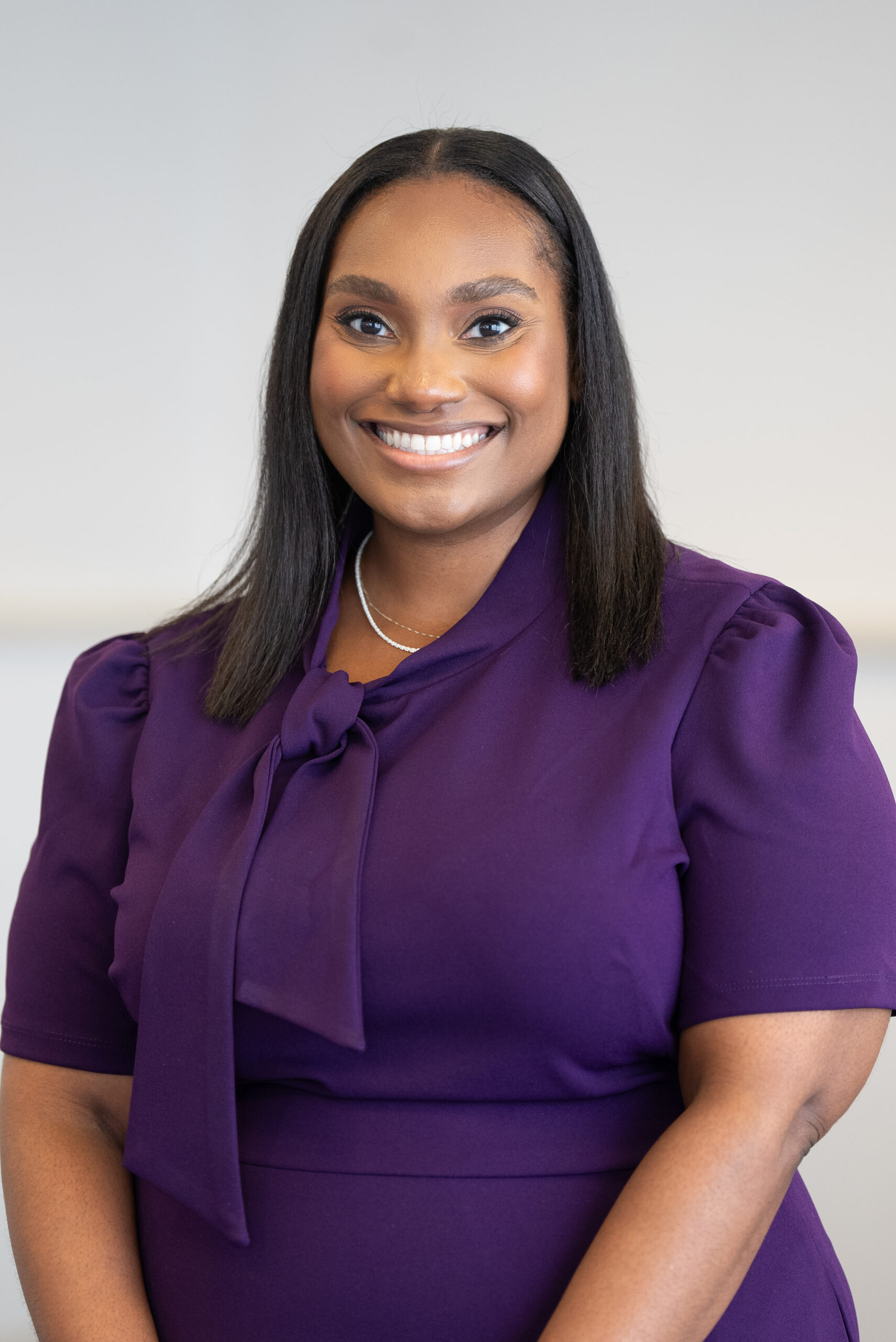 Cortney Sanders is a policy expert and strategist specializing in social insurance, fiscal policy, and racial economic equity. She serves as Director of the National Jobs for All Network at The Institute on Race, Power and Political Economy at The New School, where she leads strategy to advance a federal job guarantee and the right to meaningful employment. Her work focuses on expanding access to dignified work, strengthening economic security, and shaping policy solutions that address structural inequality.
Previously, Sanders served as Senior Advisor in the Office of the Commissioner at the U.S. Social Security Administration, Senior Manager at the Center on Budget and Policy Priorities, where she co-led the State Policy Equity Initiative, and Special Advisor to Poverty Solutions at the University of Michigan. She is a former Aspen Institute William Hearst Fellow and Aspen Ideas Fellow.
As the 2026 Twink Frey Visiting Social Activist, Sanders expanded her research efforts examining labor market barriers and its impact on women’s retirement security and longevity, which began at the SSA. She met with faculty across disciplines on campus and spoke with classes in the law school and Gerald R. Ford School of Public Policy, from which she holds a Master of Public Policy degree. She presented her TFVSA project there on April 7, 2026, at the start of the CEW+ Mullin Welch lecture, which she moderated.
- CEW+ Mullin Welch Endowed Lecture: https://cew.umich.edu/advocacy-initiatives/mullin-welch-endowed-lecture
- Approaching Retirement: The Effects of Labor Market Barriers on Economic Security: https://papers.ssrn.com/sol3/papers.cfm?abstract_id=5086070
- National Jobs for All Network: https://njfac.org
- The Institute on Race, Power and Political Economy: https://racepowerpolicy.org/about
Caroline R. Mwochi: 2023-24
 Caroline R. Mwochi is a pansexual, non-binary human rights defender advocating for safe spaces and access for all people. As co-founder and executive director of LETS BE TESTED QUEENS, also known as Western Kenya LBQT Feminist Forum – WKLFF, they center intersectional feminism at the core of all their advocacy actions.
With vast experience working on human rights and movement building, Mwochi has engaged with regional and international organizations, including the International Conference for Population Development, the Commission on the Status of Women, the High-Level Political Forum, the United Nations, the African Commission on Human and People’s Rights, and the Universal Periodic Review. They have also had several engagements with the Dutch, Belgian, Canadian, Danish, Swedish, and Finnish governments, as well as the European Union Parliament.
Additionally, Mwochi is one of the collaborators of “Herdithi,” a publication for lived reality stories of LBQITGNC persons in western Kenya, and an author of “Mental Health Challenges and Needs among Sexual and Gender Minority People in Western Kenya,” which was published in the International Journal of Environmental Research and Public Health in February of 2021.
While in Ann Arbor, they worked with members of the U-M community on resources for LBQT persons in Kenya and beyond (see links below), participated in a Global Feminisms Project interview, and in a video project highlighting the impact of being named a Twink Frey Visiting Social Activist.
Follow the Western Kenya LBQT Feminist Forum on Instagram, @wklff.lbqt.
- “Mental Health Needs And Policy Gaps For LBQT+ Persons In Western Kenya: An Intersectional Approach To Inclusive Health Care”: https://www.mdpi.com/1660-4601/18/3/1311/pdf
- How to Self-Care for Mental Health, graphic, and handout, “LBQT+ Activist and Burnout: Building Resilience. How to Quiet Your Mind in the Midst of Chaos”: https://cew.umich.edu/wp-content/uploads/2024/07/BurnOut.png
- Video that highlights the impact of being named the 2024 CEW+ Twink Frey Visiting Social Activist (TFVSA): CEW+ 2024 Twink Frey Visiting Social Activist Caroline Rucah
- Global Feminisms Project: Kenya: https://sites.lsa.umich.edu/globalfeminisms/interviews/kenya
Hyeladzira James Mshelia: 2022-23
 Hyeladzira James Mshelia is based in Abuja, Nigeria, and at the time of her fellowship was a programs associate at Connected Development (CODE), where she designed and implemented gender equality, environmental and climate-related projects, policy influencing, and Water, Sanitation and Hygiene campaigns across Africa. Motivated by her background in leading strategic campaigns, her role at CODE spurs transparency and accountability in governance while urging citizens to track and monitor government projects in their communities. In CODE, she prioritized leading campaigns that address issues affecting women and girls, including gender-responsive budgeting, girl-child education campaigns, and campaigns to eliminate all forms of violence targeted toward women and girls. Her activism is focused on Women’s Rights to position African women’s rights globally through building a Gender Advocate Movement in Africa (GAMA) with the goal of achieving the United Nations Sustainable Goal 5: gender equality and empowering all women and girls.
While in residence in Ann Arbor Hyeladzira worked on a campaign to provide a coherent framework and digital platform that seeks to mobilize and empower 500 Gender Advocates across Africa to consolidate, collaborate, educate, learn, and engage on local issues affecting them.
- View the Gender Advocate Toolkit: https://cew.umich.edu/about/visiting-social-activist-projects/gender-advocate-toolkit
Autumn R. Green: 2022-23
 Dr. Autumn R. Green has worked conducting research to inform advocacy for two decades, building her professional reputation as a groundbreaking scholar-activist and national leader in post-secondary access and success for pregnant and parenting students. At the time of her residency, she led research and impact projects as a fellow at the Urban Institute and taught an intergenerational learning seminar at College Unbound. She also co-led the launch of the SPARK Collaborative (Student Parent Action through Research Knowledge), a decentralized national partnership that aims to accelerate transformational field-level change for student caregivers through strategic coordination, knowledge sharing, data, and information resources, and by building a body of new research that centralizes and centers lived experience as critical expertise to change educational equity and opportunity systems for students with kids.
During her residency in Ann Arbor, Dr. Green advised CEW+ on how to enhance its work advocating and supporting student caregivers through research partnerships, exchanged wisdom with U-M student caregivers and CEW+ communities, and sought input about SPARK’s nationwide strategies.
- SPARK Collaborative: https://studentparentaction.org
Theresa Anderson: 2021-22
 During her residency, Dr. Theresa Anderson was a senior researcher at the Urban Institute, a nonprofit, nonpartisan social policy research organization located in Washington, DC. For over 10 years, she had led teams conducting mixed-methods research on important policy issues with the goals of reducing social inequity and promoting social justice.
She has built a body of work on parenting students to inform policies that help support family well-being as parents pursue and achieve their education goals. She earned her MPP and PhD from George Washington University and is an Ann Arbor native.
While on campus, Anderson examined how resources, supports, and policies in areas like higher education, the social safety net, tax policy, child care, the labor market, and PK-12 education account for and serve Michigan families in which a parent is pursuing a college degree. She also presented at the 2022 CEW+ Advocacy Symposium.
- Anderson is still affiliated with the Urban Institute: https://www.urban.org/author/theresa-anderson#bio
- Anderson’s presentation at the 2022 CEW+ Advocacy Symposium: http://cew.umich.edu/virtual-presentations-and-resources/#September212022
-

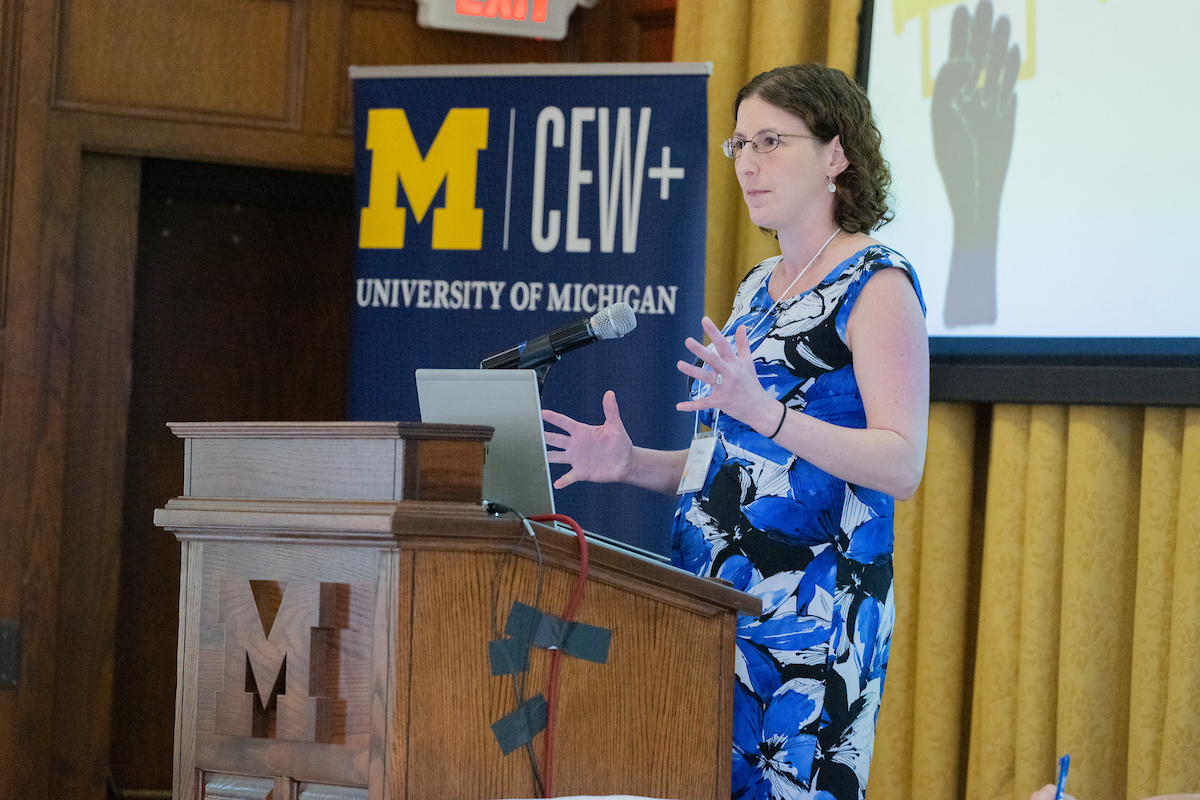
- Theresa Anderson presenting at the 2022 CEW+ Advocacy Symposium

-

- Theresa Anderson presenting at the 2022 CEW+ Advocacy Symposium
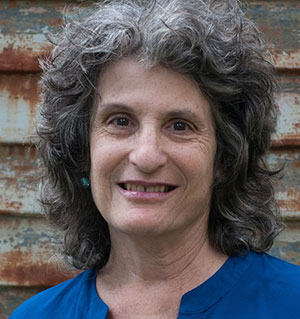
Dessa Cosma: 2019-21
 Dessa Cosma has been a social justice activist for as long as she can remember, starting her environmental, LGBTQ, and reproductive justice efforts in high school. Prior to starting Detroit Disability Power in 2018, Cosma had roles as a senior field organizer for Planned Parenthood Affiliates of Michigan; Michigan program director for the Center for Progressive Leadership; executive director of the Economic Justice Alliance of Michigan; and facilitator with Allies for Change. Cosma started Detroit Disability Power to grow the organizing power of the disability community and to continue bridging the gap between the disability community and larger social justice movements. She has a particular interest in disability-focused political work that is grounded in anti-racism and economic justice.
During her residency, Cosma presented a workshop in Fall 2019 at the CEW+ Advocacy Symposium on “How Political Climate Can Drive Advocacy,” with Amber Arellano (TFVSA 2017-18), in which she presented her findings on voting rights and accessibility at polling stations. She also led a discussion in January 2020 at the University of Michigan Museum of Art on artist Mari Katayama, whose work was on display at the museum, and on a panel at the Ford School of Public Policy entitled, “Continuing Challenges to Suffrage in Michigan in 2020: Who Still Can’t Vote?
Cosma’s project focused on developing materials about the history of women’s suffrage, the Voting Rights Act, and disability voting rights measures. She also developed training materials for election officials and the general public on disability etiquette and voting rights.
- Detroit Disability Power: https://www.detroitdisabilitypower.org
- Screen reader-friendly version of the final report titled “The Intersectional, Multi-Generational Fight for Voting Rights”: The Intersectional, Multigenerational Fight for Voting Rights (docx Version)


Wai Wai Nu: 2018-19
 Wai Wai Nu is the founder of two NGOs: Women Peace Network, which is dedicated to fighting political oppression and genocide against women in marginalized communities; and Justice for Women, a network of female lawyers offering legal aid to Burmese women. At the age of 18, Wai Wai became a political prisoner under the Burmese military government and emerged after seven years to serve as a national – and international – voice for Burma’s human rights and democracy movement.
In 2012, Wai Wai was released under a presidential amnesty. Deeply moved by the escalated violence she encountered upon her release from prison, she formed Women Peace Network as a platform to build peace and mutual understanding between Myanmar’s different ethnicities and to empower and advocate for the rights of marginalized women in Arakan and Myanmar. Wai Wai has worked to reduce discrimination and hatred among Buddhist and Muslim communities and improve the human rights situation of her people, Rohingya, a Muslim minority persecuted by the Burmese government. She has conducted women’s empowerment training, offered legal education seminars, and organized human rights and peacebuilding activities.
While on campus, she delivered the CEW+ Christobel Kotelawela Weerasinghe Lecture in October 2019, and the Donia Human Rights Center Lecture in February 2020. She also developed materials related to her non-profits, lectured at the Law School several times, and was invited to and attended an Obama Foundation event, where she met with President Obama, and pitched both her organizations and CEW+.
- Women Peace Network: https://wpnacom.wordpress.com/category/home
- Donia Human Rights Center Lecture. “The Rohingya Crisis and Future of Democracy in Myanmar”:Donia Human Rights Center Lecture. “The Rohingya Crisis and Future of Democracy in Myanmar”
- CEW+ Christobel Kotelawela Weerasinghe Lecture: https://cew.umich.edu/advocacy-initiatives/christobel-kotelawela-weerasinghe-lecture
Amber Arellano: 2017-18

Amber Arellano is the founding executive director of The Education Trust-Midwest. Founded in 2010, today Ed Trust-Midwest is widely recognized as a leading voice for non-partisan data, research, and policy expertise. Under her leadership, Ed Trust-Midwest led the cross-sector development of Michigan’s first statewide educator support and evaluation system. In partnership with the Steelcase Foundation, Arellano also founded the Center for Excellence in Teaching and Learning to bring proven best practices from leading education states to Michigan’s high-poverty schools. At the United Nations High Commissioner for Human Rights, she helped develop cross-country public engagement campaigns.
Arellano, a first-generation college graduate who holds a master of public policy degree from the U-M Ford School of Public Policy, has experience as a journalist and public high school teacher. During her residency, she studied the nation’s leading public education states and looked most closely at the state of Massachusetts. She examined structures of the Massachusetts state public education system to better understand why its learning outcomes are radically better than Michigan’s students’, especially their Black, Latino, and low-income students. Those lessons learned informed her policy and advocacy work with EdTrust-Midwest, which convened a large statewide coalition to successfully champion the legislative passage of what’s called the Opportunity Index, which directs tens of millions of dollars to low-income students’ public schools in Michigan. It was inspired by Massachusetts’ funding system.
Susan Eisenberg: 2016-17
Susan Eisenberg is a multidisciplinary artist, author, and educator whose work investigates power and employment equity, informed by her pioneering career as one of the first women to achieve journey-level status in the International Brotherhood of Electrical Workers. As a Resident Artist/Scholar at Brandeis University, she created influential literature and exhibits, including We’ll Call You If We Need You, which documents the experiences of tradeswomen.
For her VSA project, Eisenberg transformed her three-dimensional On Equal Terms Project, a traveling exhibit that celebrates the craft and experiences of women in the male-dominated construction and skilled trades industries, into a more broadly available website exhibit.
While in Michigan, Eisenberg also interviewed women line-workers in the utility industry for a nonfiction book, and she presented her work in events co-hosted by the Institute for Research on Women & Gender, the Women in Science & Engineering Program, and the Women’s Studies department.
- On Equal Terms website exhibit: https://onequalter.ms
- To explore more of Susan Eisenberg’s poems, books, essays, and art, visit susaneisenberg.com/books
Sophie Kruz: 2015-16
 In October 2015, the VSA fellowship supported Sophie Kruz, a graduate of the University’s Screen Arts and Culture program, as she edited her documentary, “Little Stones.” The movie features four courageous female artists from Brazil, India, Senegal, and the U.S. as they use graffiti, dance, music, and fashion design to create a more just, secure, and beautiful world. The film explores 21st-century barriers to gender equity, including human trafficking, female genital mutilation, domestic violence, and extreme poverty. Through the eyes of the four featured artists, viewers experience the transformative power of art and how it can be tapped to empower women and girls globally.
Kruz used her fellowship to create partnerships with faculty in the U-M School of Education who helped develop curricula and film screening discussion kits for use with high school, college, and older audiences. High school students from Ann Arbor and Detroit assisted in this process, as did students in the University’s Global Scholars learning community.
- Little Stones website, which includes a link to curriculum: https://www.littlestones.org
- Learn more about Kruz’s work: http://www.sophiakruzproductions.com
Nancy Duff Campbell: 2014-15
Nancy Duff Campbell was co-president of the National Women’s Law Center during her residency. While on campus, she participated in a program called “When Women Succeed, America Succeeds: Why We Need a Women’s Economic Agenda,” which CEW+ co-sponsored with several other units on campus.
Campbell is a recognized expert on women’s law and public policy issues who has participated in the development and implementation of key legislative initiatives and litigation protecting women’s rights, with a particular emphasis on issues affecting low-income women and their families. Her accomplishments are many, but one is the successful Supreme Court litigation establishing that two-parent families with unemployed mothers are entitled to Aid to Families with Dependent Children (AFDC, now TANF, Temporary Assistance for Needy Families). She is also the author of numerous articles on women’s legal issues.
During her fellowship, she met with students and faculty in Women’s Studies and the Law School, and worked to develop an agenda for advancing women’s economic security that can be used by state-level advocates. In conjunction with staff at NWLC, she produced the report, “Our Moment: An Economic Agenda for Women.”
- Link to “Our Moment” report: https://cew.umich.edu/wp-content/uploads/2018/05/Campbell_NWLC.OurMoment.2015.pdf
Diana Copeland: 2013-14
At the time of her residency, Diana Copeland was co-director of the East Michigan Environmental Action Counsel (EMEAC). Since 2007, EMEAC has worked with U-M and the Detroit Public Schools to run the Greener Schools program. This interdisciplinary arts and environmental education program engages high school students in redesigning their schoolyards and elements inside the buildings. By improving the school environment, students gain a sense of ownership and worth.
In the fall of 2013, Copeland, who holds a master of science in Environmental Justice from U-M, used her residency to build on her work with EMEAC. She developed an eco-feminist curriculum for youth that addresses urban environmental issues. A key part of the curriculum was “Detroit Women Speak: A Community Film on Race, Environmental Justice, Leadership and Gender in Detroit.” She worked with U-M Screen Arts & Culture alum Anna Terebelo to produce the film, which premiered in Ann Arbor with a screening event hosted by the School of Natural Resources and Environment (now SEAS) and co-sponsored by several campus units. She also spoke with students in classes and community groups.
Copeland, now Diana Wasaanung’gokwe Seales, went on to earn a PhD in Community Sustainability, Climate Justice, Gender and Indigenous Studies at Michigan State University. She is a professor in the School of Social Work.
- East Michigan Environmental Action Counsel: https://emeac.org
- Seales at SSW: https://ssw.umich.edu/directories/contacts/leo/diana-w-seales/dseales
- Detroit Women Speak: A Community Film on Race, Environmental Justice, Leadership and Gender in Detroit: https://youtu.be/tUK-ifCzodk?si=XH0-ahKvnn5FDpqu
Christine Ahn: 2012-2013
In April 2013, CEW+ hosted Christine Ahn, Executive Director of the Korea Policy Institute. KPI is an independent research and educational institute providing timely analyses of United States policies toward Korea and developments on the Korean peninsula. At the time, Ahn also held positions as Senior Research and Policy Analyst at the Global Fund for Women, Senior Fellow with the Oakland Institute, and consultant to the Grassroots Global Justice Alliance.
For her Visiting Social Activist project, Ahn, who holds a bachelor’s degree in political science and a master’s in international policy, examined women’s movements that transgress political and social norms by using direct action to break down barriers and cross boundaries. She researched the stories of women who have lived this experience, including women from the Korean peninsula and diaspora, as well as women on the Israel-Palestine border.
In 2014, she co-founded Women Cross DMZ, an organization that mobilizes women globally for peace in Korea. In 2025, Women Cross DMZ collaborated with the Feminist Peace Initiative to produce the Feminist Peace Playbook: A Guide to Transforming U.S. Foreign Policy.
- Korea Policy Institute: https://www.kpolicy.org
- Women Cross DMZ: https://www.womencrossdmz.org
- Feminist Peace Playbook: A Guide to Transforming U.S. Foreign Policy: https://feministpeaceinitiative.org/feminist-peace-playbook
Mistinguette Smith: 2011-12
Mistinguette Smith, Executive Director of the Black/Land Project, spent October 2011 interviewing black women in Michigan. She asked: “What stories do black women have to tell about relationships to land and place that are valuable and unique?” From these interviews and others she conducted across the U.S., she created a short video entitled Black/Land: Women’s Voices, which was shown as part of three workshops held in Detroit and Ann Arbor. Smith holds a master of public administration in public and nonprofit management from New York University. Her workshops highlighted the powerful traditions of resourcefulness, resilience, and regeneration evident in many black communities today.
- Watch the Black/Land: Women’s Voices video: https://vimeo.com/30813794
- Smith still leads the Black/Land Project: https://www.msmith.llc/blp/home
Kim Bobo: 2010-11
Kim Bobo founded Interfaith Worker Justice, an organization that operated from 1996 to 2017 and educated and mobilized the religious community on issues and campaigns that would improve wages, benefits, and conditions for workers. While Bobo was on campus, she met with students to talk about the everyday life of an activist and shared tips for sustainable activism. She also met with students and clergy from local religious groups to inform them about wage theft and how their organizations could fight it.
For her VSA project, Bobo, who holds a bachelor’s degree in religion and a master’s in economics, revised and updated her 2008 book, “Wage Theft in America: Why Millions of Working Americans Are Not Getting Paid – And What We Can Do About It.” Wage Theft includes violations of minimum wage laws; not paying overtime pay or forcing workers to work off the clock; denying workers their final paychecks; misclassifying employees as independent contractors to avoid paying minimum wage, overtime, and the employer’s share of FICA tax; and not paying workers at all.
- Wage Theft in America: Why Millions of Working Americans Are Not Getting Paid – And What We Can Do About It: https://www.goodreads.com/en/book/show/5646698-wage-theft-in-america
Ai-jen Poo: 2009-10
Ai-jen Poo is a co-founder and former director of Domestic Workers United, a New York-based advocacy organization of over 2,100 nannies, housekeepers, and caregivers for the elderly. DWU mobilized a statewide campaign for a Domestic Workers Bill of Rights. During her residency, Poo wrote about the lessons learned by Domestic Workers United regarding coalition building, promoting policy statewide, expanding membership, and developing the leadership skills of its volunteers.
The paper, entitled “Organizing with Love: Lessons from the New York Domestic Workers Bill of Rights Campaign,” was given to 1,000 activists who attended the U.S. Social Forum in Detroit in June 2010. Later that summer, New York Governor David Paterson signed the bill into law. In June 2011, the International Labor Organization adopted the first-ever global rule recognizing domestic workers and setting international labor standards to protect their rights.
Poo has since received many accolades, including a MacArthur Foundation Fellowship. She now heads the National Domestic Workers Alliance (NDWA).
- National Domestic Workers Alliance: https://www.domesticworkers.org
- Domestic Workers United: https://www.domesticworkersunitednyc.org
- Organizing with Love: Lessons from the New York Domestic Workers Bill of Rights Campaign: https://drive.google.com/file/d/1JkfZoKQQP-0m5UkNsDR67XlbSntK2Ocr/view?usp=sharing
- Learn more about Poo: https://www.aijenpoo.com/bio
Mallika Dutt: 2008-09
During her residency, Mallika Dutt was the Executive Director of Breakthrough, an international human rights organization that uses education and popular culture to promote values of dignity, equality, and justice. It addresses women’s rights, sexual and reproductive rights, immigrant rights, racial, ethnic, and caste equality, and religion and peace. Breakthrough’s video game – ICED – puts players in the shoes of an immigrant to illustrate how unfair immigration laws deny due process and violate human rights. The organization’s album “Mann Ke Manjeere: An Album of Women’s Dreams” topped India’s music charts for five months, and a music video from the album won India’s Screen Awards. Another campaign by Breakthrough, “Bell Bajao” (Ring the Bell), urges men to take a stand against domestic violence.
Prior to creating Breakthrough, Dutt directed the Center for Women’s Global Leadership and later worked for the Ford Foundation as a Program Officer for Human Rights. She has served on such boards as Human Rights Watch Women’s Rights Project, Sister Fund, and WITNESS.
For her TFVSA project, Dutt wrote a paper about Breakthrough’s theory of social change and the ways in which it builds a culture of human rights. This paper has been circulated to a wide variety of rights organizations to inform and inspire their efforts. It was useful to Breakthrough’s staff and board as they created their strategic plan for organizational growth.
- The organization is now called Let’s Breakthrough: https://letsbreakthrough.org
- On Building Human Rights Culture Breakthrough’s Vision, Mission and Strategy: https://drive.google.com/file/d/1wIUF7u8XmXjDF1Z7cEJED2ilC5VBZsNY/view?usp=drive_link
Linda Burnham: 2007-08
Journalist, activist, and women’s rights leader Linda Burnham co-founded the Women of Color Resource Center (WCRC). For more than twenty years, WCRC promoted an agenda that recognized the interconnections between anti-racist, anti-sexist, and anti-homophobic organizing. Co-founded by Burnham and Miriam Ching Yoon Louie in 1990, it worked in Oakland, California, and nationally to oppose war, protect civil rights, and advance immigrant rights. As a community-based organization, it trained women of color to work on social justice issues, linked activists with scholars, and provided analysis and information on the social and political issues affecting most women of color. In her capacity as Director of WCRC, Burnham organized and led a 2001 delegation of 25 women of color activists and scholars to the United Nations World Conference Against Racism in Durban, South Africa. In 2004, she led “Count Every Vote,” a human rights project that trained citizens to monitor the polls in the southern United States.
During Ms. Burnham’s 2008 stay in Ann Arbor, she met with over a dozen U-M faculty whose research focused on political participation and feminism, gender-conscious leadership training models, and social movement building. She also interviewed eleven social justice leaders and reflected on her own organizing experiences. The result was a paper entitled “The Absence of a Gender Justice Framework in Social Justice Organizing.”
Paper: https://cew.umich.edu/wp-content/uploads/2018/05/BurnhamFinalProject_1.pdf
Anne Ladky: 2006-07
At the time of her residency, Anne Ladky, Executive Director of Women Employed, developed and directed innovative advocacy and training programs designed to improve women’s economic status. A nationally recognized expert on women’s employment issues, equal opportunity, workforce development, and career advancement, she has held appointments to the Illinois Workforce Investment Board, the Chicago Workforce Board, and the Community Advisory Board of the Junior League of Chicago.
During her stay at CEW+, she met with faculty experts in business, public policy, economics, and labor & industrial relations to develop a persuasive business case showing how businesses can save money (e.g., in recruitment and retraining, customer satisfaction, and repeat business) by providing low-wage workers with adequate wages, sick time, and health insurance, and greater scheduling predictability. Based on those conversations and her CEW+ research, she outlined a business case to show how investing in low-wage workers is good for businesses, good for workers, and good for society. That business case was promoted through her organization’s Investors for Change program, which brought together women corporate and civic leaders to advocate for improved policies and employment practices for low-wage women workers.
- Women Employed: https://womenemployed.org
- Investors for Change: https://womenemployed.org/investors-for-change
Connie Evans: 2005-06 (Inaugural Academic Year)
As founder of the Women’s Self-Employment Project (WSEP), Connie Evans created the largest microenterprise program in the country to assist low-income urban women. She also played an active role in global efforts to encourage investments that support human rights.
As the first President of WSEP, Evans was an early advocate for Individual Development Accounts (IDAs) for Illinois welfare recipients. After IDA legislation was passed and implemented there, IDAs went on to become a nationally popular vehicle for personal savings. The microcredit program she led at WSEP won numerous awards, including the first Presidential Award for Excellence in Microenterprise Development. Evans has influenced decision-making about development investments at home and abroad through her board memberships on such organizations as the Federal Reserve Bank, the Global Fund for Women, and the Social Venture Network.
During her stay, Evans consulted with University researchers and then convened town meetings with local African American women to learn how they spent, saved, and managed their money. Her findings are summarized in the report: The Intersection of Gender, Race, and Culture as Influencers on African American Women’s Financial Fitness, Asset Accumulation, and Wealth Attainment.
Since that time, Evans has been President and CEO of the Association for Enterprise Opportunity (AEO).